Portable power stations offer flexible electricity for travel, emergencies, and remote business. However, picking the perfect model entails more than just comparing pricing. Real-world performance is influenced by several factors, including capacity, power rating, battery type, and charging pace. A unit that appears powerful on paper may fail to support your devices if its specs do not meet your requirements. Understanding technological aspects allows you to prevent overload, short runtimes, and excessive weight. This tutorial covers the most important aspects to consider and how to choose a portable power station that fits your lifestyle. Careful planning ensures that power is dependable and efficient wherever it is used.
What Specifications Matter Most in a Portable Power Station?
Battery Capacity (Wh) and Runtime Calculation
How long a portable power station can operate your gadgets is determined by its battery capacity, which is expressed in watt-hours (Wh). Divide the device’s power by the station’s Wh rating to get an idea of runtime. For instance, under optimal circumstances, a 600Wh unit can run a 100W appliance for almost six hours. Efficiency losses should always be taken into consideration as they may somewhat shorten the actual duration. Greater capacity adds weight and expense while also lengthening running time. Instead of picking the largest size available, pick one that corresponds to the amount of time you anticipate using it. A precise runtime estimate guarantees that your portable power plant will operate practically when needed and avoids disappointment.
Continuous Output (W) and Surge Power Explained
Watts of continuous output indicate how much electricity the station can consistently supply. When appliances, particularly those with motors or compressors, start up, surge power implies that there are brief bursts of electricity available. A refrigerator, for instance, could need more power to start up than to run. The station could automatically shut down if the surge capacity is too low. Before making a purchase, thoroughly consider both ratings. Add up all of the devices you intend to run at the same time. To avoid overload, don’t go beyond the continuous output limit. Stable operation and protection for the station and related electronics are ensured by matching output capacity to device needs.
Battery Chemistry, Cycle Life, and Safety Protection
Durability, safety, and longevity are all impacted by battery chemistry. Lithium-ion batteries have a high energy density and a lightweight construction. Batteries made of lithium iron phosphate (LFP) have better thermal stability and a longer cycle life. LFP models are appropriate for frequent usage since they frequently support thousands of charge cycles. For information on warranty coverage and cycle ratings, consult the manufacturer’s specifications. Integrated battery management systems guard against short circuits, overcharging, and overheating. The dependability of the product is increased by certified safety requirements. Selecting a portable power station with a battery chemistry that has been proven to work and extensive protective measures lowers long-term replacement costs and guarantees reliable operation.
See also: Challenges in Technology Innovation
How Do You Match a Portable Power Station to Your Needs?
Camping, Travel, and Outdoor Activities
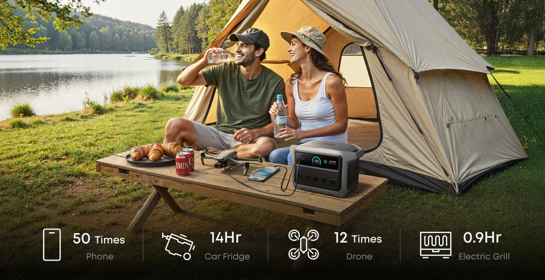
Moderate capacity and portability are important to outdoor users. Phones, cameras, lights, and tiny coolers are usually powered by a small unit that ranges from 300Wh to 700Wh. Compatibility with solar charging increases mobility on long excursions. Sturdy handles and a lightweight design enhance portability. Select several output ports to accommodate a range of devices. Comfort at the campground is improved by quiet operation. Steer clear of large units that add weight without providing any further advantages. If you anticipate harsh conditions, consider weather resistance and long-lasting structure. During camping or adventure activities, effective power is ensured without compromising mobility by matching size and features to your preferred travel style.
Home Emergency Backup and Blackout Planning
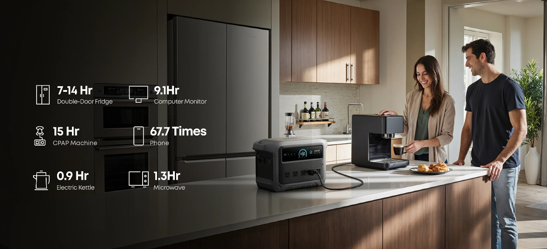
For home emergencies, select a station that supports essential electronics during a brownout or blackout. Units ranging from 500Wh to 1,500Wh are commonly used to power routers, lights, computers, and other gadgets. Confirm that the output wattage satisfies the device’s starting requirements. Keep the station well-charged and kept in an easily accessible position. Fast AC charging shortens recovery time between outages. Some types support solar recharging during a prolonged brownout or blackout. Portable stations cannot be used to replace full-home backup systems, but they do enable easy communication and comfort. Choosing enough capacity guarantees that you preserve connectivity and basic safety during unexpected power outages or extreme weather occurrences.
Work Sites, RV Use, and High-Power Devices
Higher output and capacity are required for work situations and RV life. Small appliances, tools, and prolonged device usage can be powered by stations with a capacity of more than 1,000Wh. Verify that compressors or motor-driven devices are supported by the surge rating. Versatility is increased with several 12V connectors and AC outlets. Efficiency while on the road is increased by quick recharging from solar panels or car alternators. Robust handles and a sturdy housing endure harsh environments. Carefully consider compatibility with onboard electrical systems before using an RV. Stable operation without overload is ensured by matching power plant parameters to heavy-duty requirements. In emergency situations, construction, and travel, careful selection promotes dependability and productivity.
Conclusion
Choosing the finest portable power station necessitates knowing the criteria and applying them to real-world applications. Battery capacity influences runtime, whereas output ratings regulate device compatibility. The chemistry of the battery and its safety measures have an impact on its longevity and value. The final decision is guided by lifestyle variables such as camping, home backup, and business uses. Avoid overpaying on unneeded capacity while ensuring appropriate performance for key devices. Before making a purchase, compare efficiency, charging alternatives, and warranty coverage. When technical specifics are aligned with practical demands, you get dependable portable power that can handle daily chores, travel, and emergency circumstances without adding complexity or compromising.

 By
By