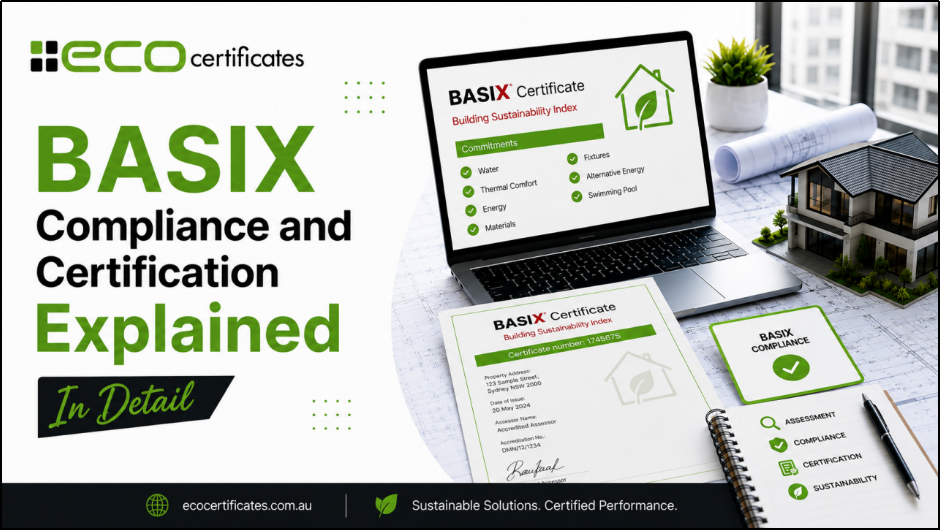
BASIX stands for Building Sustainability Index. It is a mandatory NSW Government sustainability scheme that applies to all new residential buildings and renovations over $50,000 across New South Wales.
A BASIX Certificate must be submitted with every residential Development Application before the council will accept it. This guide covers everything you need to know about BASIX.
What Is BASIX and Where Did It Come From?
BASIX was introduced in July 2004 by the NSW Department of Planning. It sits under two key pieces of legislation: the Environmental Planning and Assessment Regulation 2000 and the State Environmental Planning Policy 2004. It has won multiple industry and government awards since its introduction and is widely regarded as one of the strongest sustainable planning measures undertaken in Australia.
The scheme has been updated several times since 2004. The most significant change came in July 2017, when energy and BASIX assessment thermal comfort targets increased substantially. Water targets remained unchanged at that time.
Who Does BASIX Apply To?
BASIX applies to all new residential buildings and alterations over $50,000 in NSW. A BASIX Certificate is required before a Development Application can be lodged with the local council.
| Development Type | BASIX Required? |
| New single dwelling | Yes |
| Dual occupancy | Yes |
| Townhouses and villas | Yes |
| Granny flats | Yes |
| Renovations over $50,000 | Yes |
| Multi-dwelling and apartment buildings | Yes |
The Three BASIX Targets Explained
BASIX measures performance across three targets. All three must be satisfied before a certificate is issued.
Water Target
The BASIX water targets require a minimum 40% reduction in potable water consumption for new houses and townhouses compared to a standard dwelling. Apartments require a minimum 30% reduction, though this can reach 40% depending on the suburb, development size, and configuration. Water efficiency is achieved through:
● Water-efficient showerheads, taps, and cisterns
● Rainwater tanks for garden irrigation, toilet flushing, laundry, and pool use
● Water-saving appliances specified in the design
Energy Target
The energy target requires a reduction in greenhouse gas emissions from the dwelling. It covers hot water systems, heating and cooling appliances, and lighting. Targets vary by climate zone across NSW. Sydney targets are generally higher than those in harsher inland climates, where heating requirements are more significant.
Thermal Comfort Target
BASIX thermal comfort compliance requires NatHERS thermal modelling for most developments. NatHERS – the Nationwide House Energy Rating Scheme – rates each dwelling according to its thermal performance across summer and winter using accredited software. Eco Certificates uses HERO and BERS Pro for all NatHERS modelling.
For single dwellings only, a DIY method based on the National Construction Code deemed-to-satisfy requirements is available as an alternative to full NatHERS modelling.
| BASIX Target | Minimum Requirement | How It Is Met |
| Water | 40% reduction (houses), 30% (apartments) | Efficient fixtures, rainwater tanks |
| Energy | Varies by climate zone | Efficient appliances, solar, hot water systems |
| Thermal Comfort | NatHERS modelling or DIY method | Computer simulation or NCC deemed-to-satisfy |
How the BASIX Online Assessment Tool Works
The BASIX online assessment is completed through the NSW Department of Planning’s web-based tool. The assessor enters all development details, including location, dwelling type, construction specifications, glazing, appliances, and water fixtures. The tool then calculates performance against all three targets simultaneously.
The BASIX planning portal issues the certificate automatically once all targets are satisfied and the fee is paid. The process for a standard residential assessment follows these steps:
1. Development details and construction specifications entered into the tool
2. Glazing, appliances, and water fixtures inputted and assessed
3. Tool calculates performance against water, energy, and thermal comfort targets
4. If all targets are met, certificate issued upon payment
5. Certificate submitted with the Development Application to council
For developments that cannot be fully assessed through the standard tool — typically due to emerging technologies or unusual building configurations — an Alternative Assessment pathway exists. The Department of Planning specifies a minimum turnaround of 20 working days for this pathway, which makes it unsuitable for most standard applications.
See also: Cat Litter Crystals or Clumping Cat Litter? What Is Better?
Single Dwelling vs Multi-Unit BASIX Assessments
The BASIX assessment tool and available options differ between single dwellings and multi-unit developments.
A single dwelling is defined as an individual house on a separate land lot, whether detached or semi-detached. Multi-unit assessments cover any combination of dwellings on a single certificate — from two attached houses through to large apartment buildings with any number of units.
| Factor | Single Dwelling | Multi-Unit |
| Thermal comfort method | NatHERS or DIY method | NatHERS only |
| Common areas | Not applicable | Must be included in assessment |
| Certificate coverage | One dwelling | Any number of dwellings |
The DIY thermal comfort method is only available for single dwellings. Multi-unit developments must use NatHERS thermal simulation regardless of the development’s complexity.
What Does a BASIX Assessor Do?
A BASIX assessor reviews the architectural plans, confirms all construction details, completes NatHERS thermal modelling where required, and enters all information into the BASIX planning portal. They optimise the assessment to meet all three targets most practically and cost-effectively for the specific project.
An experienced assessor also identifies potential compliance problems before submission — glazing that will fail thermal comfort modelling, water fixture specifications that fall short of the water target, or appliance selections that affect the energy score. Resolving these before submission avoids revision requests and council delays.
What Happens After the Certificate Is Issued?
The BASIX Report is submitted with the Development Application to the local council. Every commitment listed on the certificate is legally binding and must be implemented during construction exactly as specified.
The Principal Certifying Authority verifies compliance on site before the Occupation Certificate is issued. If any design changes are made after the certificate is issued, a revised assessment and new certificate are required before construction can proceed.
Common reasons BASIX assessments require revision:
● Glazing specifications changed after the certificate was issued
● Appliances or hot water systems substituted during construction
● Water fixture specifications not implemented as nominated
● Structural changes that affect the thermal performance of the dwelling
A revised BASIX online assessment adds time and cost to the project. Getting the details right at the assessment stage is consistently cheaper than managing revisions mid-construction.
Get Your BASIX Certificate Right the First Time
Eco Certificates has been delivering BASIX assessments across NSW since 2009. Every assessment is optimised for practical compliance and guaranteed for first-time council approval. The team uses HERO and BERS Pro for all NatHERS thermal modelling and provides full support from initial assessment through to Occupation Certificate.
Contact Eco Certificates on 1300 16 24 36 or request a quote online.
Frequently Asked Questions
What is the difference between a BASIX Certificate and a NatHERS Certificate?
A BASIX Certificate confirms compliance across all three NSW sustainability targets. A NatHERS Certificate specifically addresses thermal performance and is used to satisfy the thermal comfort section within the BASIX assessment. They serve different but connected compliance purposes.
Can BASIX targets be met without solar panels?
Yes. Solar panels are not mandatory. Energy targets can be met through efficient hot water systems, insulation, glazing, and appliance selections. An experienced assessor identifies the most practical and cost-effective combination for your specific design.
What happens if BASIX commitments are not implemented during construction?
The Occupation Certificate cannot be issued. The Principal Certifying Authority verifies all commitments on site before signing off. Non-compliance discovered at that stage is expensive and time-consuming to rectify.
Does BASIX apply to commercial buildings?
No. BASIX applies exclusively to residential buildings in NSW. Commercial buildings comply under Section J of the National Construction Code, which uses a separate assessment framework.

 By
By