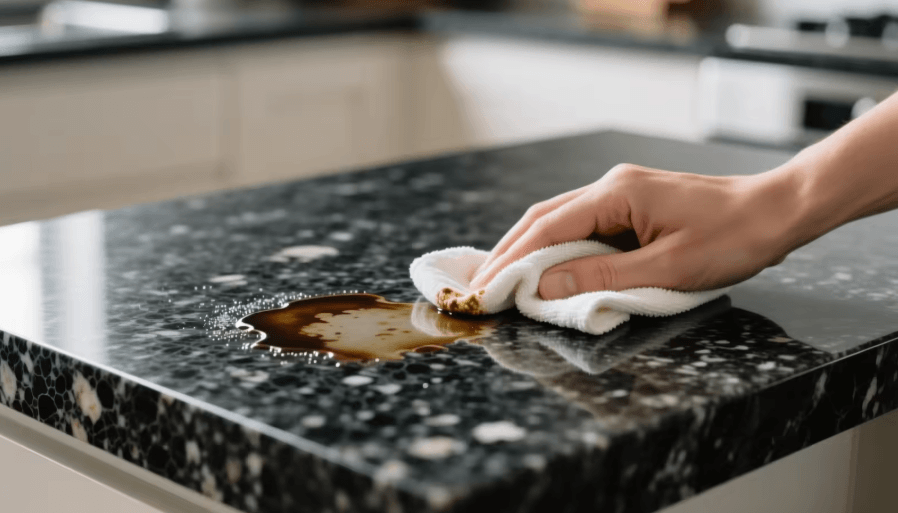
Your kitchen surface used to be easy to clean. A quick wipe after cooking was usually enough to remove spills and keep the benchtop looking fresh. However, over time, you may have noticed that certain stains no longer disappear so easily. Coffee rings seem to linger, oil marks leave dark patches, and food spills appear to leave a lasting impression despite regular cleaning. If this sounds familiar, it is often a sign that the surface is no longer performing the way it once did.
In many homes across Sydney, this issue is commonly seen on natural stone kitchen surfaces, where changes in porosity and surface protection can affect how easily stains are removed. In such cases, understanding the condition of your Stone Benchtop Sydney surfaces becomes important, as the problem is usually linked to the material itself rather than everyday cleaning habits.
Why Kitchen Stains Become Stubborn
Kitchen benchtops face constant exposure to substances that can affect their appearance over time. Everyday items such as coffee, red wine, cooking oils, tomato-based sauces, and spices can gradually penetrate porous surfaces if they are not cleaned promptly. Natural stone, in particular, contains tiny pores that can absorb liquids and pigments when its protective barrier becomes compromised. Once contaminants move below the surface, they become much harder to remove using ordinary cleaning methods.
Many homeowners assume that regular wiping is enough to prevent staining. While routine cleaning certainly helps, repeated exposure to spills can slowly affect the stone’s ability to resist absorption. Even sealed surfaces can become vulnerable as protective coatings wear down over time. What starts as a minor mark may eventually develop into a stain that seems impossible to remove.
Common Causes of Staining
One of the most common causes of stubborn stains is a worn or deteriorated sealant. Sealers are designed to slow the absorption of liquids into stone surfaces, but they do not last forever. As the sealant weakens, moisture, oils, and coloured liquids can seep into the stone more easily, leading to noticeable discolouration.
Incorrect cleaning products can also contribute to the problem. Harsh chemicals, bleach-based cleaners, acidic solutions, and abrasive scrubbing products may damage the protective finish or sealant layer. Over time, this can leave the surface more susceptible to staining and deterioration. Acidic substances can also cause etching, which creates dull patches that resemble stains but are actually surface damage.
Delayed cleanup is another significant factor. Spills that remain on the surface for extended periods have more opportunity to penetrate the material. Oils, wine, coffee, and strongly coloured foods are particularly known for causing difficult stains when left unattended.
Water exposure can also play a role. Repeated moisture around sinks and preparation areas may gradually affect the surface, especially if the stone is no longer properly sealed. Watermarks and mineral deposits can develop over time, contributing to a worn and discoloured appearance.
The Bigger Picture
Persistent staining is often more than a cosmetic issue. It can indicate that the benchtop is experiencing surface wear, reduced protection, or early signs of deterioration. As stains become more frequent, the surface may also become increasingly vulnerable to additional damage.
When a stone surface begins absorbing liquids more readily, cleaning becomes more difficult, and maintenance requirements increase. Discolouration can make an otherwise attractive kitchen look aged or neglected, even when the space is well-maintained. In some cases, recurring stains may be accompanied by dull spots, etching, or loss of shine, all of which suggest that the protective qualities of the stone have diminished.
Ignoring these warning signs can allow the condition of the benchtop to worsen over time. Addressing the underlying cause early often helps prevent more extensive restoration work later.
Professional Solutions
When stains become deeply embedded or surface protection has deteriorated, professional restoration services can often provide a practical solution. The first step is usually a detailed assessment to determine whether the issue involves staining, etching, sealant failure, or a combination of these factors.
Professional deep cleaning can remove contaminants that standard household products cannot effectively address. In cases where the protective seal has worn away, resealing the stone may restore its resistance to future staining. A quality sealant helps reduce absorption and provides valuable protection against everyday spills.
For surfaces affected by etching or dullness, restoration techniques such as honing and polishing may be required. These processes can help restore clarity, shine, and uniformity across the benchtop. Professional restoration not only improves appearance but can also extend the lifespan of the surface by addressing underlying wear before it becomes more severe.
When to Seek Expert Help
Some signs indicate that professional assistance may be necessary. Deep stains that remain visible after repeated cleaning attempts often suggest that contaminants have penetrated below the surface. Similarly, recurring marks that return despite cleaning may point to a compromised sealant or ongoing absorption issues.
Etching is another situation where expert intervention is often beneficial. Unlike ordinary stains, etching results from a chemical reaction that damages the surface finish itself. Cleaning products cannot remove this type of damage because it is not sitting on the surface; it has altered the stone. Professional refinishing is typically required to restore the affected area.
If your benchtop has lost its shine, developed widespread discolouration, or shows signs of repeated staining, a professional evaluation can help identify the most appropriate treatment.
See also: Easy Weekend Home Improvement Projects
Expert Advice for Long-Term Protection
Maintaining a stone benchtop involves more than routine cleaning. Regular inspections, appropriate cleaning products, prompt spill removal, and periodic resealing all play an important role in preserving the surface.
Homeowners seeking professional Stone Benchtop Sydney services for maintenance, restoration, or long-term protection can benefit from consulting experienced specialists. Expert advice can help identify the cause of persistent stains and recommend suitable solutions that preserve both the appearance and longevity of the kitchen surface.
FAQs
Why are stains suddenly becoming harder to remove from my benchtop?
This often occurs when the protective sealant has worn down, allowing liquids and contaminants to penetrate the stone more easily.
Can coffee and wine permanently stain stone surfaces?
Yes. If left on the surface for too long, coffee, wine, and other coloured liquids can penetrate porous stone and create difficult-to-remove stains.
Does sealing completely prevent stains?
No. Sealing helps slow absorption and provides protection, but it does not make the surface stain-proof. Prompt cleanup is still important.
What is the difference between staining and etching?
Staining changes the colour of the stone because a substance has been absorbed into it. Etching damages the surface finish through a chemical reaction, often leaving dull or lighter marks.
How often should a stone benchtop be resealed?
The frequency depends on the type of stone, usage levels, and the existing sealant. Many surfaces benefit from periodic inspections to determine when resealing is needed.
Can professional restoration remove deep stains?
In many cases, yes. Professional cleaning, honing, polishing, and resealing can significantly improve the appearance of stained or worn stone surfaces and help prevent future issues.


 By
By